
Frome Town Council recognises the calls from scientists, governments and the international community to urgently move away from fossil fuel use, deforestation and other human activities that are causing climate change and biodiversity loss.
We recognise that climate change is already happening and building local resilience is crucial to dealing with the consequences of this. We believe that while national governments need to act ambitiously on climate change and biodiversity loss through legislation and international cooperation, there is also a lot we can do as a town, as neighbourhoods and households to reduce our carbon footprint, protect biodiversity, increase resilience and create a greener and healthier future for everyone in Frome.
Frome Town Council declared a Climate Emergency and followed this with declaration of Ecological Emergency in 2021. Recognising that these issues are interconnected we now refer to the “Climate and Ecological Emergency”.
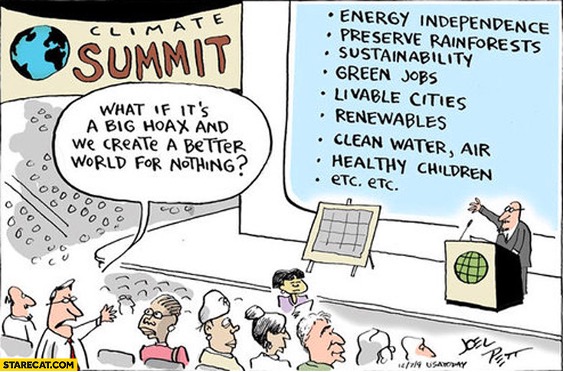
From Emergency to Opportunity
The urgent action that we need to take to address climate change present a significant challenge but also an opportunity. Moving away from fossil fuels to clean energy and modes of transport will create cleaner air and healthier lifestyles; planting more trees and returning land to wildlife will increase biodiversity and safeguard species and our treasured forests and green spaces for future generations. Eating local, seasonal food will strengthen the local economy and create jobs.
Frome’s Carbon Footprint
The University of Exeter and the Centre for Sustainable Energy (CSE) have created a modelling tool for towns and parishes to understand their emissions footprint. Explore their interactive IMPACT tool.
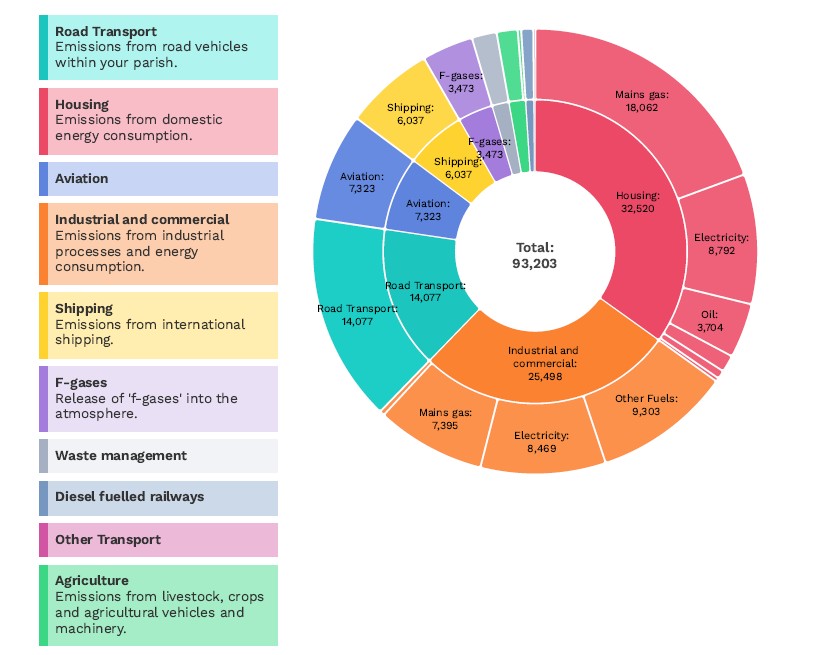
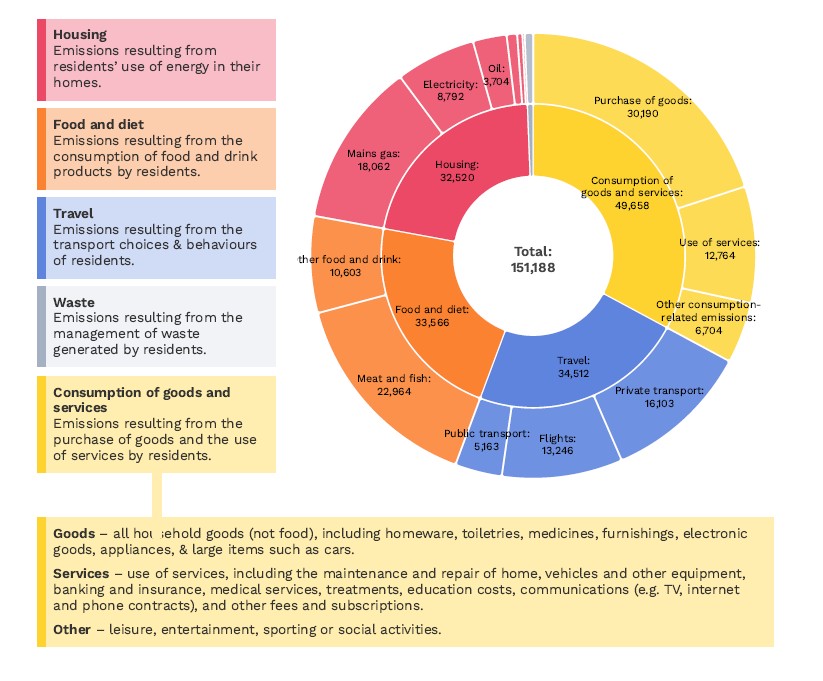
There are two ways of viewing a community’s carbon footprint: territorial-based, or consumption-based.
Territorial footprints consider the emissions produced within a geographical boundary regardless of whether the residents within the community are engaged in or demand those activities. For example, if a factory lies within the boundary of a local authority, then regardless of whether what is produced in the factory is consumed locally or exported to other parts of the country (or world).
A consumption footprint captures all the emissions produced from the activities that the area’s residents engage in, regardless of where geographically they occur. For example, emissions resulting from the food they eat, the clothes and household items they buy, the leisure activities they engage in, their travel behaviours, and the heating of their homes.
View the full report of Frome’s Carbon Footprint:
To understand how you can reduce your household’s emissions, take a look at What can I do?
Find out how Frome as a town can become carbon neutral see Frome’s Climate Emergency Strategy.