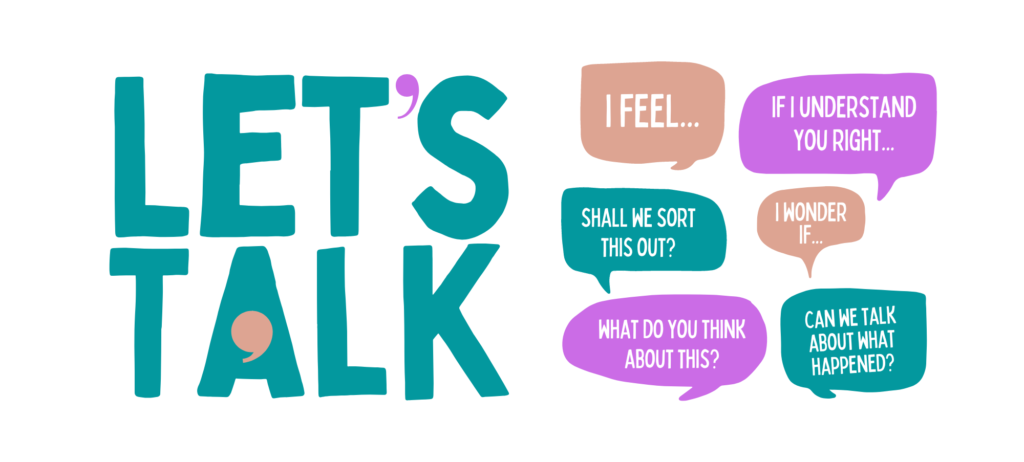
What other people say and do affects us constantly, whether they are family, friends, neighbours or colleagues. These relationships can be wonderful. They can also be difficult, confusing, stressful and tiring.
Let’s Talk can help. Everyone in this Frome community group has had some simple training in Restorative Conversations and learned skills which have made a big difference.
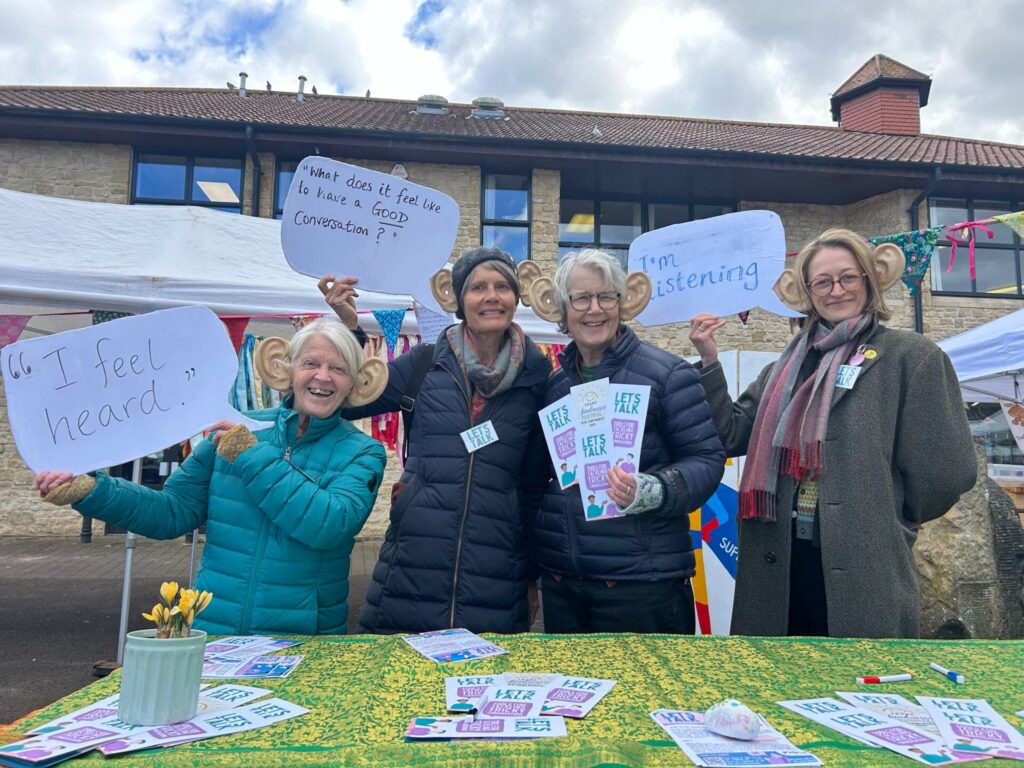
Their open practice sessions, held on the 4th Thursday of every month 6.30-8pm at Frome Town Hall, are a fantastic opportunity to build practical skills in Restorative Conversations, an approach aimed at fostering understanding and resolving conflicts. Whether you’re new to Restorative Conversations or looking to sharpen your skills, all are welcome to attend any, or all, of these free practice sessions. Topics include, challenging without blame, active listening and empathy. To see upcoming sessions and book your space take a look below.
In addition to these free sessions, and the downloadable toolkit Let’s Talk runs regular introductory workshops on the fundamentals of how to tackle tricky conversations. These workshops help participants gain confidence in handling those tricky conversations and build stronger relationships.
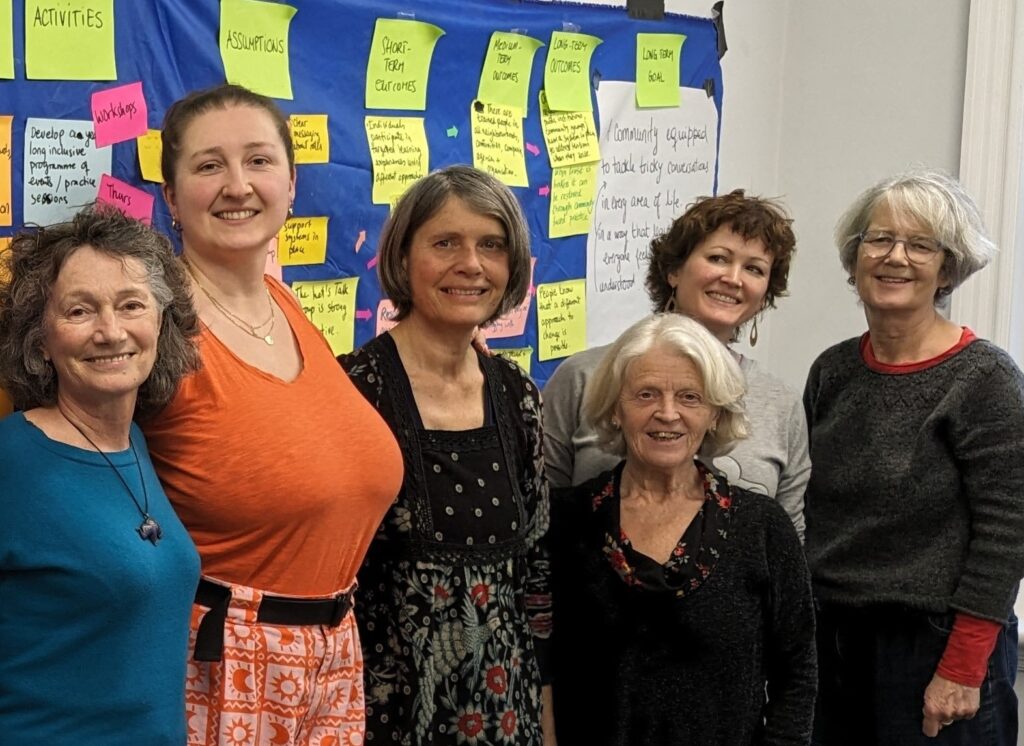
There is also a free printed toolkit available which explains some of those skills so that you can use them too. They might help you change a difficult conversation into a useful one, or help you work through something worrying with a family member or a neighbour.
“The principles behind restorative justice is that it’s restoring something, about letting people express their emotions and having their voice heard. It’s about bringing a sense of closure and repair to difficult situations.
If you’re interested in joining the group or finding out more, please email Hannah Stopford, Frome Town Council’s Community Development Officer, at hstopford@frometowncouncil.gov.uk.