As well as trying to encourage wildlife into my garden, I also like to produce some food for us humans to eat! And yes, sometimes I have to share it with the local wildlife.
Last year wood pigeons decided to strip my plum tree of fruit, eating the small, still green plums well before they were ripe (we got a little fruit from the lower branches). Sparrows are very fond of chard seedlings, pigeons and white butterfly caterpillars love to eat plants of the cabbage family, aphids decimated my broad beans and as for slugs and snails… Obviously, I do not use pesticides in a garden that I wish to share with the local wildlife. However, there are measures that can be taken to protect some crops, I use netting on my perennial kale to keep pigeons and caterpillars away although it does not stop slugs and snails. When using netting it is important to check it regularly to ensure that no birds, hedgehogs or other creatures have got entangled in the net. It is recommended to leave a gap at the base of the netting so that hedgehogs can get in and out below it. Although I do not want my crops eaten, I still enjoy watching a variety of butterflies flitting around my garden, so it is a good idea to provide sacrificial plants for cabbage white butterflies, they will eat nasturtiums for instance or a few spare plants of cabbage, kale or calabrese could be planted away from the main growing area. As for aphids, once the ladybirds got going, the runner beans had little aphid damage. It is very much a case of keeping things in balance.
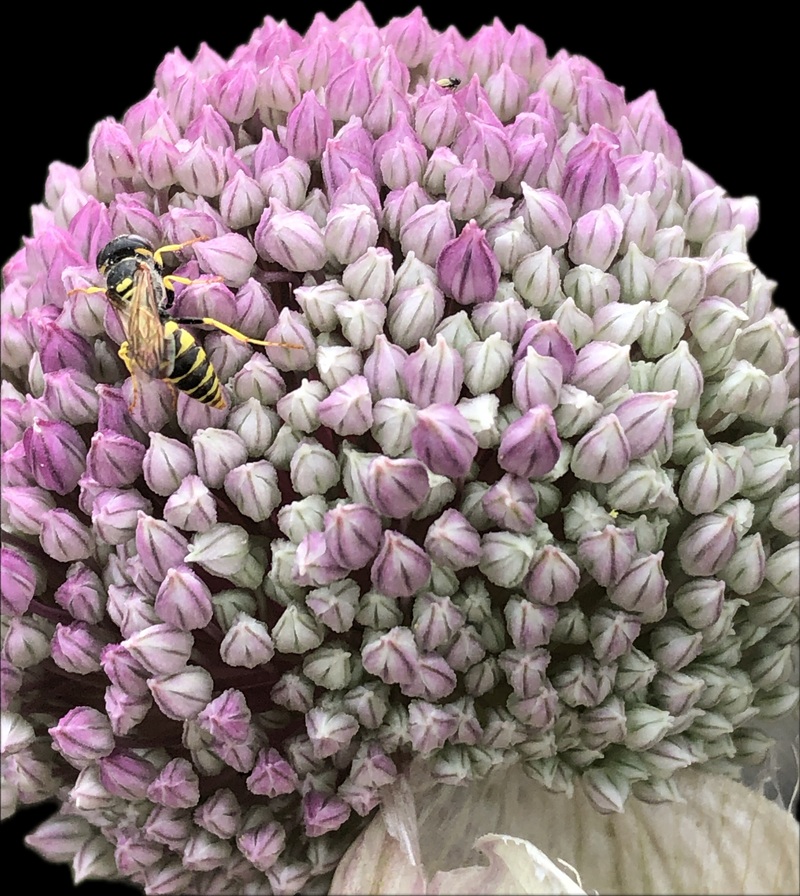
Many of the things considered good practice in a productive garden will also benefit a wildlife garden. Mulches covering the soil suppress weeds, help to lock moisture into the soil and encourage microorganisms and invertebrates, these in turn provide food further up the food chain feeding a range of larger invertebrates, amphibians, birds and hedgehogs. As well as enjoying the wildlife, many creatures will positively benefit a productive garden, from predators munching on garden pests such as aphids to pollinators that ensure that fruit develops; without pollinators there would be no peas, beans, squashes, strawberries or apples. I like to leave a few leeks to flower, not only are they beautiful flowers but they are also extremely attractive to pollinators, if allowed to flower, kale and broccoli flowers will also attract a range of insects.
So, if you have a little space, do consider growing some food, it is very rewarding to have a plate of homegrown vegetables, freshly harvested, unsprayed and with no food miles involved.